Analysis of The Queuing System at Majapahit Gas Station Using Monte Carlo Simulation
DOI:
https://doi.org/10.24036/rmj.v5i2.95Keywords:
Monte Carlo Simulation, SPBU Majapahit, Steady State, Queuing TheoryAbstract
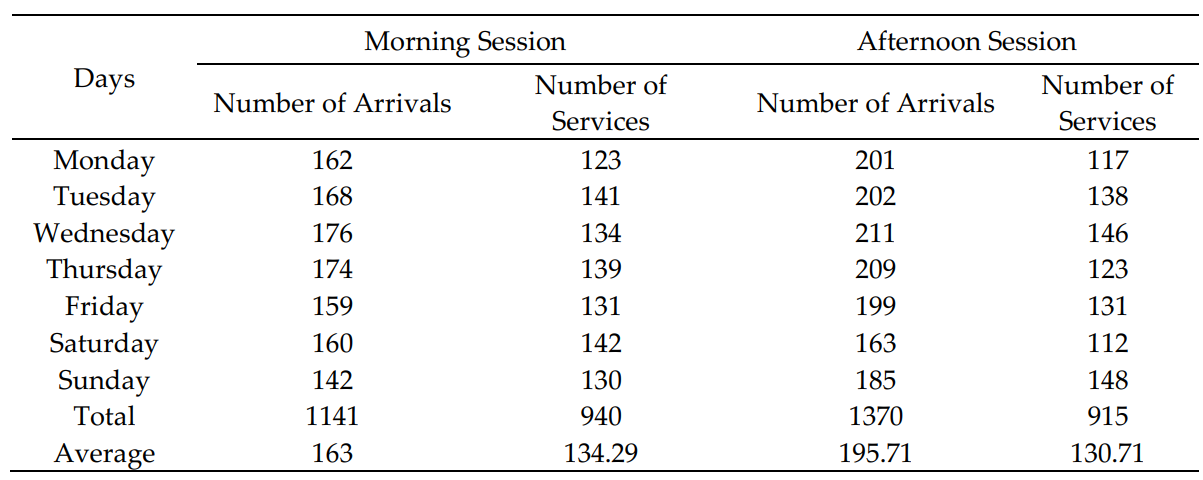
Queue is a condition of customer accumulation at a service place, which can cause inconvenience to customers, especially if the queue lasts a long time. One of the service stations that often experience long queues is Majapahit Gas Station, especially during peak hours such as in the morning at 07.00-08.00 and in the afternoon at 16.00-17.00. To overcome this problem, it is necessary to apply queue theory and Monte Carlo simulation as an analytical solution. This research aims to improve the effectiveness of service performance at Majapahit Service Station by determining the minimum number of refueling pumps needed during peak hours to minimize queues. Based on the analysis using queue theory and Monte Carlo simulation, it was found that the minimum number of pumps needed in the morning was three units, with a utilization rate of 80.40%. Meanwhile, in the afternoon four pumps are needed with a utilization rate (steady state) of 75.40%. Since the steady state utilization rate is below 100%, the system can be said to be stable, so the possibility of customer accumulation is small.