The Effect of Implementing the Problem-Based Learning Model on the Systematic Communication Skills of Grade XI Students at SMAN 2 Padang
DOI:
https://doi.org/10.24036/rmj.v5i2.175Keywords:
Problem-Based Learning (PBL), Mathematical Communication Skills, Direct Instruction, Mathematics Education, Senior High School StudentsAbstract
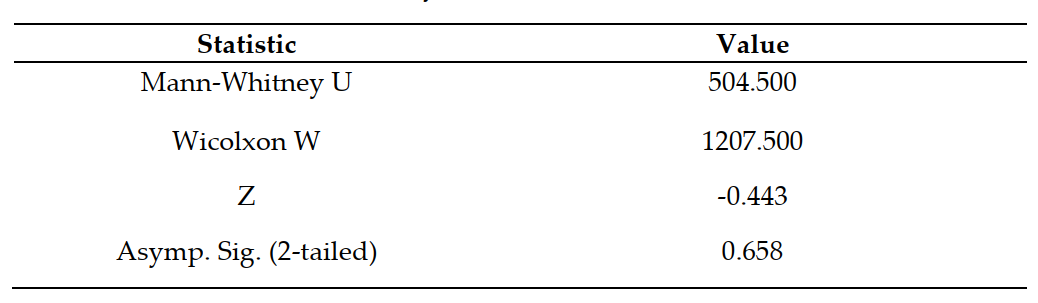
This study was motivated by the low level of students’ mathematical communication skills in mathematics learning. One learning model that can encourage students to participate actively in the problem-solving process is Problem Based Learning (PBL). This study aimed to determine and describe the mathematical communication skills of students taught using the PBL model compared to those taught using direct instruction in Grade XI, Phase F, at SMA Negeri 2 Padang. This research employed a quasi-experimental method with a The Nonequivalent Posttest-Only Control Group Design. The research sample consisted of 66 students, comprising 29 students in the experimental class taught using the PBL model and 37 students in the control class taught using direct instruction. Data on students’ mathematical communication skills were collected through a posttest consisting of essay questions developed based on three indicators of mathematical communication skills. The data were analyzed using descriptive statistics and the Mann-Whitney U test. The results showed that the mean score of the experimental class was 80.90, while the control class obtained a mean score of 77.59. However, the Mann-Whitney U test yielded an Asymp. Sig. (2-tailed) value of 0.658, which was greater than the significance level of 0.05. Therefore, there was insufficient statistical evidence to conclude that the mathematical communication skills of students taught using the PBL model were better than those of students taught using direct instruction.